

Ice Skating Safely: The Do’s and Don’ts of Preventing Injury

As the holiday season arrives, people are looking for things to do outside the house. With a limited number of outdoor activities available during the colder winter months, ice skating is a classic holiday activity that brings families and friends outdoors to enjoy the cold.
Now more than ever before, it’s important to maintain your health and safety when partaking in ice skating activities to avoid a trip to the hospital over a preventable cold weather accident.
We’ve assembled our best ice skating safety guidelines to make adults and children alike feel a bit safer while having fun on the ice this year.
Warm-Up
Injuries related to any exercise can often be prevented with a simple warm-up. Even if you’re only planning to skate around an outdoor rink once or twice to enjoy the lights and grab a hot chocolate, ensuring that you do a few leg stretches before starting won’t hurt.
Especially in cold weather, dynamic stretching with some arm rotation swings or side lunges before strapping on the skates can make the difference between a rigid fall or warm muscles that are ready to participate in the activity.

Wear a Helmet
If you wear a helmet for bike riding or skateboarding, why wouldn’t you also wear a helmet for skating across hard ice? It’s important to protect yourself from head injuries especially in public skating rinks with many people of different sizes, levels, and speeds.
Avoiding a Concussion from Skating
Common injuries from skating can come from a number of accidents. Head injuries are often some of the most worrisome and can occur alongside the following:
- Ankle sprains or fractures
- Patella or shoulder dislocation
- ACL and meniscal tears
- Head injury and concussion
- Cuts and bruises from falling
If injured, it’s important to alert a member of staff at the rink right away to get the first aid or required medical attention.
Practice Falling Down
This may sound silly, but before skating off around other people, take a moment to see what falling down feels like. Enacting the feeling of falling in a controlled way may prevent you from falling on your wrist or hitting your head in case of a real slip.
- When you lose your balance, cross your legs and try to sit down on the ice
- Avoid putting your hands down especially around other skaters
- Try to land on your behind where you’ll have the best cushioning
By practicing falling the correct way a few times, you might prevent an injury later on.
Wear Fitted Skates 
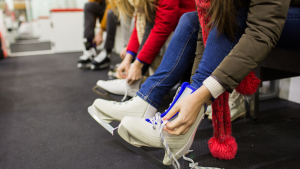
Just as you wouldn’t wear sneakers that were a size too large or a size too small to go for a run, getting the right skates is also important even when renting them. Ice skates should be:
- Fitted
- Tied extra tightly for a secure fit
- Supportive of the ankle
Ankles should not bow when skating. Try to keep your ankles as straight as possible.
In addition, consider wearing extra tall socks while skating. You can fold the top of the sock over the laces to ensure that the tight laces do not get caught on anything or untie accidentally. Socks should be warm and thick for extra padding.
Many falls are caused by inappropriate footwear. In addition, skates that the wrong size might cause blisters, and skates that are too small might not have the space for warm socks, which can lead to discomfort or circulatory problems if outside below freezing for too long. 
Check the Blades
Especially if your skates are rentals, check that the blades are sharp and in good condition. Adults should be able to feel two distinct edges on ice skates to ensure they are sharp enough. Be careful not to run your hand down the blade lengthwise, as you could cut yourself.
Check the Ice Quality
Most ice rinks will periodically run over the ice to ensure that any extra patches are smoothed and ready for skates. It is very important to patch holes so skaters don’t trip.
You should advise the staff at the indoor or outdoor rink if there are any gaps in the ice that could cause injury.
Keep a Safe Distance
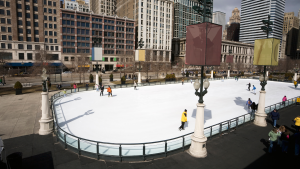
Keeping a safe distance from other skaters is also important in case of lost balance on the ice. Many injuries are caused by collisions. If you’re an inexperienced skater, it’s perfectly acceptable to stay closer to the wall or use assistance if you’re not yet 100% comfortable on the ice.
Allowing for extra space between yourself and other skaters can also help reduce the spread of viruses like the flu or COVID-19.
Speak with Your Local Rink
Some outdoor rinks or ribbons may request that people make reservations to ensure that no overcrowding occurs and skaters can maintain a safe distance from one another and avoid long lines.
“We do have skate guards that will regulate the speed or activity of skaters. No racing, no other equipment allowed on the ice, and all skaters must go in the same direction. We also rent skate aids for beginners,” said a Maggie Daley Ice Ribbon Representative.
Location Information


Surgical Affiliations

Geneva Surgical Suites
119 Elizabeth Ln., Genoa City, WI 53128
Phone: 262-295-1213
Alexian Brothers Medical Center
800 Biesterfield Rd.
Elk Grove Village, IL 60007
Phone: 847-437-5500
St. Alexius Medical Center
1555 Barrington Rd.
Hoffman Estates, IL 60169
Phone: 847-843-2000
Advocate Good Shepherd Hospital
450 West Highway 22
Barrington, IL 60010
Phone: 847-381-0123